Feed items
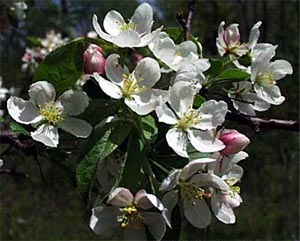
Apple (Malus pumila) Non-Native
Apple (Malus pumila)
Parts used: fruit
Nutritional information: They are an excellent source of vitamin C, pectin and other fibers as well as being a good source of potassium. Most of the apple’s important nutrients are contained in its skin, and raw apples are higher in many nutrients and phytochemicals as well (Murray 251).
Cautions: Mind the worms (Curtis 1016).
Pacific Northwest Medicinal Plant Guide (Check out all plants growing in Tryon Farm's medicinal garden!)
- Login to post comments


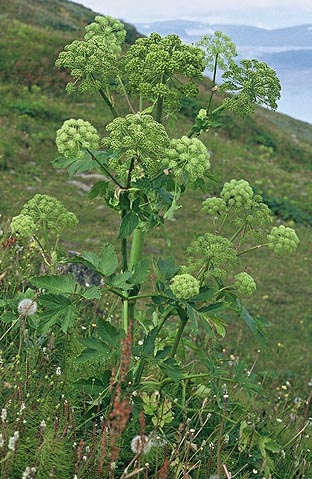
Angelica (Angelica spp.) Non-Native
Angelica (Angelica spp.) Non-Native
Parts used: Chinese angelica (Dong quai) (A. sinensis): rhizome, European angelica (A. archangelica): root and aerial portions
Medicinal uses: Chinese: used as a blood tonic for deficiency conditions such as anemia, palpitations, and lowered vitality. Also regulates the menstrual cycle and is a warming herb to the circulatory system. European: a warming tonic herb for digestion and circulation, but does not have the same tonic action as Chinese angelica (Chevallier 63).
Additional uses: The stem of European angelica can be candied. The root and seeds have been used to flavor liquors with their licorice-like flavor. As a dye plant angelica produces a green dye when mordanted with iron (Kowalchik 13).
Cautions: Do not take during pregnancy (Chevallier 63).
Pacific Northwest Medicinal Plant Guide (Check out all plants growing in Tryon Farm's medicinal garden!)
- Login to post comments
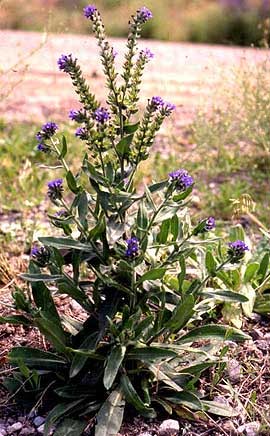
Alkanet (Anchusa officinalis) Non-Native
Alkanet (Anchusa officinalis) Non-Native
Parts used: flowers, young leaves, root
Medicinal and other uses: Flowers and young leaves can be added to salads. A root decoction is given as a blood cleanser and expectorant for coughs. Powdered root rind is used to color hair and medicines. It can also be used as a fabric dye.
Cautions: None stated (Bremness 145).
Pacific Northwest Medicinal Plant Guide (Check out all plants growing in Tryon Farm's medicinal garden!)
- Login to post comments
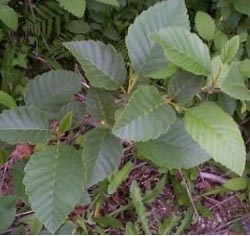
Alder (red) (Alnus rubra) Non-Native
Alder (red) (Alnus rubra) Non-Native
Parts used: bark, leaves
Medicinal uses: As an astringent is often used as a mouthwash and gargle for tooth, gum, and throat problems; the astringency of a bark decoction helps to contract mucous membranes and reduce inflammation; it can also staunch internal and external bleeding and heal wounds; the leaves can be used on the soles of the feet to reduce aching and can be placed on the breasts to relieve engorgement in nursing mothers
Cautions: None known (Chevallier 164-5).
Pacific Northwest Medicinal Plant Guide (Check out all plants growing in Tryon Farm's medicinal garden!)
- Login to post comments
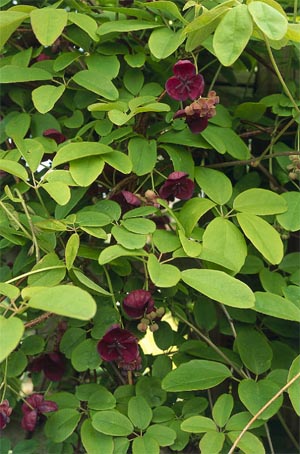
Akebia (Akebia quinata) Non-Native
Akebia (Akebia quinata) Non-Native
Parts used: fruit, stem, root
Medicinal uses: In Chinese medicine the edible fruit is used with the stem to stimulate lactation, menstruation, sweating to detoxify fever, and blood circulation; it soothes the liver and treats skin inflammation; its potassium content makes it a beneficial diuretic for urinary problems and fluid retention; it strengthens the muscles of the digestive tract; the root treats fevers
Cautions: None stated (Bremness 276).
Pacific Northwest Medicinal Plant Guide (Check out all plants growing in Tryon Farm's medicinal garden!)
- Login to post comments
guthrie and grapes
Navigate gallery: (thumbnails represent previous and following two images, if present, surrounding current image)
- Login to post comments
jenny and grapes from doris

Navigate gallery: (thumbnails represent previous and following two images, if present, surrounding current image)
- Login to post comments
grape juice making
Navigate gallery: (thumbnails represent previous and following two images, if present, surrounding current image)
- Login to post comments
plaster work party
Navigate gallery: (thumbnails represent previous and following two images, if present, surrounding current image)
- Login to post comments
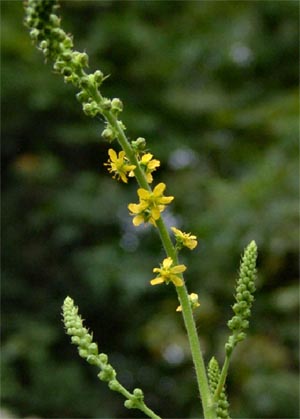
Agrimony (Agrimonia eupatoria) Non-Native
Agrimony (Agrimonia eupatoria) Non-Native
Parts used: aerial portions
Medicinal uses: As an astringent in the treatment of external wounds, especially to stop bleeding. Also used to treat mucosal inflammations of throat and acute diarrhea, piles, cystitis, and urinary incontinence (Chevallier 162).
Additional uses: Due to its astringent properties it makes a fine lotion for the skin. The leaves and stems can also be used to make a yellow dye (Kowalchik 4).
Cautions: None known (Chevallier 162).
Pacific Northwest Medicinal Plant Guide (Check out all plants growing in Tryon Farm's medicinal garden!)
- Login to post comments
Feedback and participation welcome! Please send bug reports to web@tryonfarm.org