Feed items
Community Sustainability Immersion Program: July 31 - Aug. 20
Another world is possible! How do we create it, grow it, preserve it, share it? How do we come into relation with ourselves and the land, nourishing our bodies, minds and spirits with the food and wisdom we create together?
These are the questions (and answers!) explored by TLC Farm's Community Sustainability Immersion Program - a dynamic experience of community learning and sharing.
Located at TLC Farm's unique seven-acre community farm in Portland, Oregon, this program immerses participants in a wholistic approach to sustainability and permaculture systems. The program combines theory, practice, innovation and adventure to introduce participants to the principles of permaculture, natural building, community process and organic gardening, with a focus on local food and plant medicine.
TLC Farm's immersion program consists of a three-week summer session, from July 31 to August 1, which will immerse ten participants, 18 and older, in a hands-on, holistic approach to sustainable living and community. Read about last year's program in their awesome blog: www.tryoninternship09.blogspot.com
Interns will tend, harvest and preserve food from the animals and garden, learn to make medicine from wild and cultivated plants, visit urban & rural sustainable farms, and much more! Tuition, room & board: $1,600. ($1,500 if signed up by June 15). Courses will be taught by TLC Farm teachers and local experts.
Each program participant will come away from this program with a set of skills which will be increasingly useful in our changing climate and economy and will a personalized action plan, supported by community mentors. A limited number of work-trade scholarships are available. Please contact intern@tryonfarm.org or call 503-245-3847 for more information about the program and registration. Application instructions are available at http://tryonfarm.org/share/node/687.
*~*~*~*~*~*~*~*~*~*~*~*~*~*~*~*~*~*~*~*~*~*~*
More Details about TLC Farm's Sustainable Community Immersion Program
1. Community living: Program participants will experience communal life on two levels. You will create a community and be responsible for collective decision-making, meal preparation, conflict resolution, etc. In addition, the community of interns will interact with, and be supported by, Cedar Moon, the intentional community at TLC Farm.
2. Outdoor living: The program is an immersive, outdoor experience. You will live in tents, wash in outdoor showers, cook in a outdoor kitchen, and have most classes and work experience outdoors. There will be an indoor space for reading, research and chill time with computers and a library. While Portland has a well deserved reputation for rain, summers are often quite dry especially from July through September.
3. Hands-on work and Theory: The program includes a balance of lectures & discussions with hands-on experiential learning and field trips. Over time, the hands-on work will become increasingly self-directed.
4. Food preparation and sharing: You will be provided with ingredients and suggestions as needed, and will collaboratively create and implement a cooking and cleaning schedule. TLC Farm is primarily a vegetarian community: we have chickens and dairy goats for eggs and milk and grow much of our own food.
5. TLC Farm location & history : A unique seven-acre farm surrounded by a 700-acre state park in Portland, Oregon, TLC Farm demonstrates how sustainable living techniques can further goals often perceived as contradictory: urban density of human habitat inside the growth boundary, combined with not only conservation of natural resources and public greenspace, but actual enhancement of native ecosystems. TLC Farm was born out of a community effort to save the land from development and turn it into a community space for sustainability education. This land now functions as a gathering place, sustainability education facility, community center and retreat – all within a bike ride from downtown Portland.
6. Work Study positions: There are four work-study positions provided for the program. Food coordinators will help the create menus for each week based on food available at the farm, coordinate cooking and cleaning schedules, and manage the community kitchen. Scribes will take notes and photographs of all aspects of the program and use these to create a blog during the program. Work trade positions will require approximately 10 hours of work per week.
Keywords: permaculture, sustainability, sustainable, garden, food, plant spirit medicine, summer internship, summer internship, camping, Oregon, PNW, NW, Portland, farm, forest.
2010 Summer Programs at TLC Farm - registration now open!
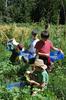
TLC Farm has an exciting summer of programs planned for kids, teens and adults. All summer long, folks will be learning about becoming part of the land and part of community in this inspiring setting.
We invite you to check out our offerings below, and we hope to see you at the farm!
*C johnsen
Sat, 12/19/2009 - 1:07am — Anonymous- Login to post comments
- Visit عقد عمل
Volunteer Educators Meeting
Who: Volunteer Youth Educators with the Hands on Sustainability Program
What: Getting together for tea and lunch to go over TLC Farm curriculum, discuss experience with farm, outdoor, and sustainability education. and practice some hands-on lessons for the upcoming field trip season. MeetingMeeting
- Login to post comments


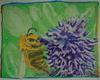
Bonsai bee painting
Navigate gallery: (thumbnails represent previous and following two images, if present, surrounding current image)
- Login to post comments
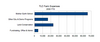
2009 YTD Expenses (by department category)
Navigate gallery: (thumbnails represent previous and following two images, if present, surrounding current image)
- Login to post comments
TLC Farm Arts Action Team
The TLC Farm Arts Action Team invites earth artists of Portland to participate in growing movement for ecological art! We are exploring the use of the arts as a mode of social healing to experience our connectedness to all our relations. As part of the process, we will feature rotating exhibitions that interact with TLC Farm itself.
To get involved with the Arts Action Team, email: arts@tryonfarm.org.
More about TLC FAAT
The Arts Action Team thinks that some of the most exciting things about TLC Farm are the interweaving of communities, and the creation of new modes of communication-in-place. Using ecology and the land as co-creative muse, metaphor, medium, and mentor, our goal is to facilitate the expression of these ideas and processes in concrete, intentional ways, through performance, sculpture/installation, exhibition, workshops, and other artistic means.
Themes
Here are some lenses we use to understand our work:
Place – focusing on the relationships between people, their histories, the land on which they live, how these things interweave in our minds and affect individuals concretely.
Participation – taking art off the pedestal and out of the museum, giving it back to the community, and celebrating collaboration, communication, and the creation of communal experiences.
Evolution – exploring processes of becoming, whether of individuals, communities, nature, or other things entirely, exploring the effects of time and energy on art and the world.
Social change – effecting social change inspired by art or artistic experiences; also celebrating alternative histories through art, using examples from the history of social movements to inspire and activate ourselves.
Ritual – utilizing art to create a spiritual experience for the viewer/participant, creating sacred places and energies to help people connect with their bodies, with the land, with each other, with something greater.
Art as a way to manifest/envision another way of living – We believe there is a better way to be. We believe in the power of art to open up spaces for dialogue, to crystallize and change our consciousness, and to help us envision and create a different world.
Current events: We are currently developing an Invitations for artists to create installation with the land (and elsewhere). Stay tuned for the announcement! Sign up for monthly updates, check the website, etc.
(Later maybe a Projects on the Farm section describing installations etc. that people can visit on the walking tour)
kurSPyvoUolhDdTwctF
Fri, 12/04/2009 - 2:39pm — Anonymous- Login to post comments
- Visit vcyNEDIBEAoD
Ecologies of Participation
Observing the last 5 years of work/play (what we call “plerk”) at TLC Farm, we've observed that there's quite a variety of different ways that people participate. All of these are just rough outlines, and many people fit between or beyond these categories (of course).
Some people are generalists: they're excited about many different kinds of plerk, and will respond to a wide variety of requests for help. Eg. cobbing a wall, canvassing a neighborhood, coming to a meeting, answering emails. This is beneficial for its flexibility & openness!
Others are specialists: there's a specific kind of engagement that they really dig, and that's mostly all they'll do: bookkeeping, teaching, farm hosting, etc. This is beneficial for its focus & expertise!
Some people are rooted: they have long-term, regular commitment to this place and project. Whether a couple times a year or almost every day, their participation is consistent. This is beneficial for its reliability & history!
Others are nomadic: they may be really focused on TLC Farm for a while, and then be off to another project across town or across the world. This is beneficial for its intensity & cross-pollination!
Some people are solitary: they really prefer to do something alone, if possible. This is great for minimizing the coordination of schedules etc. to get things accomplished.
Others love guilds: they do best when surrounded by a tight, highly functional groups with complementing abilities. This is awesome for ongoing working groups or projects where a variety of perspectives are key.
And others are communal: they love being part of a big community event with the energy of lots of different people. This is perfect for getting a lot done quickly.
Some people are looking to be (learners or) mitochondria: they'd like the steps in accomplishing something to be laid out for them. This is great when someone else has a clear idea of what needs to be done and just needs more hands.
Others feel called to be (coordinators or) enzymes: they're motivated to help bring all the different pieces and people together, co-create goals, support folk in reaching them, etc. This is valuable when folk want to just get out and do things but lack a structure for it.
Still others want to be (advisors or) neurotransmitters: they're best suited to offering verbal or written perspective on how to improve decisions or actions, rather than implementing things themselves. This is great for getting outside perspective & expert wisdom from someone with lots of experience, etc.
There are obviously a lot more categories! Still, having some idea where you see yourself in these terms will help us to know how best to support you in engaging in the way you want to here.
Start your own project
Anyone can propose a project, and it can take any form as long it meets the following criteria:
- It furthers the mission of TLC Farm.
- It has a co-creative accountability structure – that is, there's an agreed process (no matter how intuitive and dynamic) for taking next steps, evaluating outcomes, and supporting follow-through. This includes an oversight relationship with one or more mentors and/or WGs.
- Its scope, resource budget, and plans are proposed to and approved by the relevant WGs.
This is how the living, breathing work of TLC Farm happens, and our focus is on figuring more and better ways to help different kinds of people become more effective, more healed, and more aligned with spirit and the earth.
Once you've got an idea and (some of) the people to make it happen, contact participate@tryonfarm.org to take the next step by making a proposal at a working group or spokescouncil meeting!
Feedback and participation welcome! Please send bug reports to web@tryonfarm.org